Walking the Kumano Kodō: A Slow Journey Through Japan’s Sacred Forest
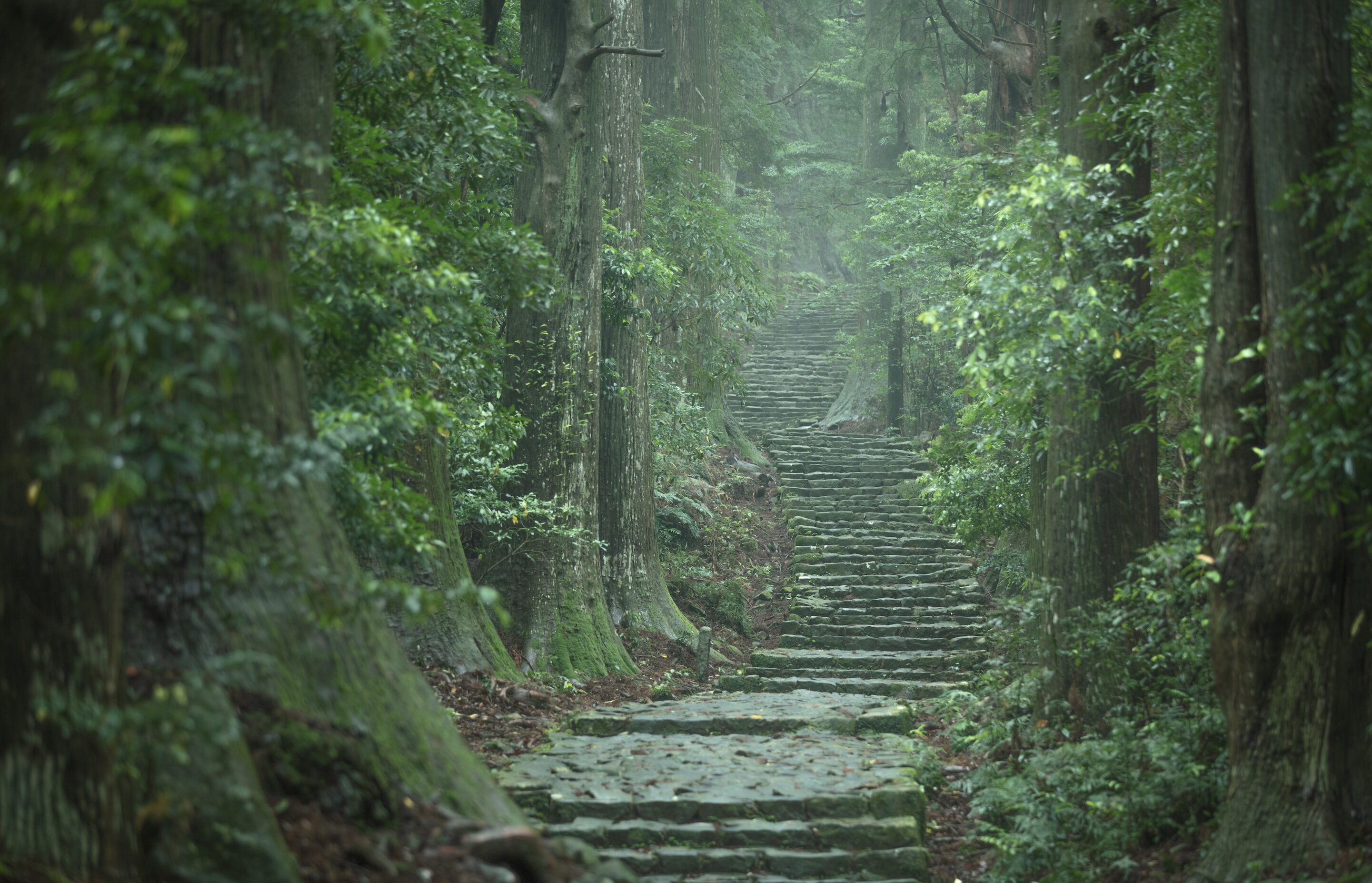
The stone steps vanish into mist. Somewhere ahead, through the cedar and the silence, the trail continues — as it has for over a thousand years.
The Kumano Kodō is not a hike. It is an encounter — with the mountain, with the rain, and with something older than any guidebook can explain.
This ancient network of pilgrimage routes cuts through the Kii Peninsula in Wakayama Prefecture, connecting three grand shrines known collectively as the Kumano Sanzan. UNESCO designated it a World Heritage Site in 2004, not for its famous views, but for a quality that has grown increasingly rare: it is genuinely still.
For travelers seeking hidden Japan — not the curated version, but the version that has always been there — the Kumano Kodō offers something that cannot be scheduled or replicated.
A Trail That Was Never Built for Speed
Most travelers who come to Japan move quickly. Kyoto to Osaka, Osaka to Tokyo — a bullet train connecting one city to the next, the days organized around departure times.
The Kumano Kodō asks something different.
It asks you to slow down until your footsteps match the rhythm of the forest.
The trail passes through small mountain villages that have stood largely unchanged for centuries. Stone lanterns mark the path where pilgrims once passed — samurai, emperors, merchants, farmers. Everyone walked this road. The path doesn’t discriminate. It only asks for your time.
This is one of the few places in Japan where the act of getting there is inseparable from the experience itself. The walk is the point. The destination arrives slowly, if at all.
The Villages Along the Way
Between the major shrine complexes lie clusters of old homes and family-run guesthouses called minshuku. In these places, a grandmother might bring you barley tea without being asked. A farmer might pause his work to point you toward the correct fork in the trail.
These moments are not engineered for tourism. They are simply what happens when a traveler walks through a village that has been welcoming strangers for a very long time.
Yunomine Onsen — Where the Water Has Always Been Hot
Yunomine Onsen, one of Japan’s oldest hot spring settlements, sits at the edge of the trail. A small wooden bathhouse stands over a thermal stream where pilgrims have purified themselves since the 8th century. Dipping into that water, you understand that some things in Japan don’t need to be restored — they simply continue.
The villages along the Nakahechi route are small. Nights are quiet in ways that are unfamiliar to most travelers. If you choose to stay in this area rather than base yourself in a larger town, the experience shifts entirely.
If you’re looking for a place to stay near the trail, small guesthouses and ryokan in the Tanabe or Hongu area are worth exploring — filtering by traditional style often surfaces the right kind of place. Browse ryokan near the Nakahechi trailhead →
What the Forest Teaches You
The Kumano Kodō offers something that can’t be packaged or posted — a particular kind of solitude that feels full rather than empty.
The forest absorbs sound. The trail demands attention. After a few hours, most walkers notice that the background noise of daily life has grown faint.
Japan has many famous temples. Many beautiful gardens. But the Kumano Kodō is one of the few places where the landscape itself seems to carry spiritual weight — not because of signs or explanations, but because of the accumulated intention of a thousand years of pilgrims who believed it did.
Some paths change you by showing you something. This one changes you by making you walk long enough that something falls away on its own.
Practical Notes for a Slow Walk
The most accessible section for first-time walkers is the Nakahechi route, which can be completed over two to three days. Luggage forwarding services operate between the main trailheads, so you needn’t carry everything.
The best seasons are spring and autumn. Summer brings heat and leeches. Winter brings solitude and snow — its own kind of gift, for those prepared for it.
Book accommodation in advance. The villages are small and rooms are limited. Staying in a minshuku rather than a large hotel is worth the extra planning — the meals alone, prepared with local mountain vegetables and freshwater fish, are reason enough.
Getting There
The nearest major access point is Tanabe City, reachable by limited express train from Osaka in approximately two hours. From there, buses run to the main trailheads along the Nakahechi route.
If the Kumano Kodō sits within a longer journey through western Japan — Kyoto, Nara, Osaka, and then down into the Kii Peninsula — the journey south from Osaka through the Kii Peninsula is one of the quieter train rides in Japan. A JR Pass covers this rail leg and simplifies the wider journey considerably.
Where to Stay
A night in Kawayu Onsen, where the river itself becomes an outdoor bath in winter, is worth planning around. For those who prefer browsing by region and style, small guesthouses around Hongu-cho and Kawayu Onsen — the areas closest to the trail’s heart — can be found through Agoda or Booking.com.
What to Bring
The trail is well-maintained but uneven in places — stone steps, tree roots, occasional wet rock. A pair of waterproof trail shoes, broken in at home before the trip, makes two days on stone paths considerably more comfortable. If you’re walking with a guide for at least one day section, guided Kumano routes are available for those who want local context before walking alone.
The Kumano Kodō is not a destination you finish. You walk as much of it as time allows, and then you carry the rest of it home.