Utsui Station: Japan's Sky Station, Suspended Between Mountain and Cloud
kato
Stillness Japan
The photographs don’t prepare you for the silence.
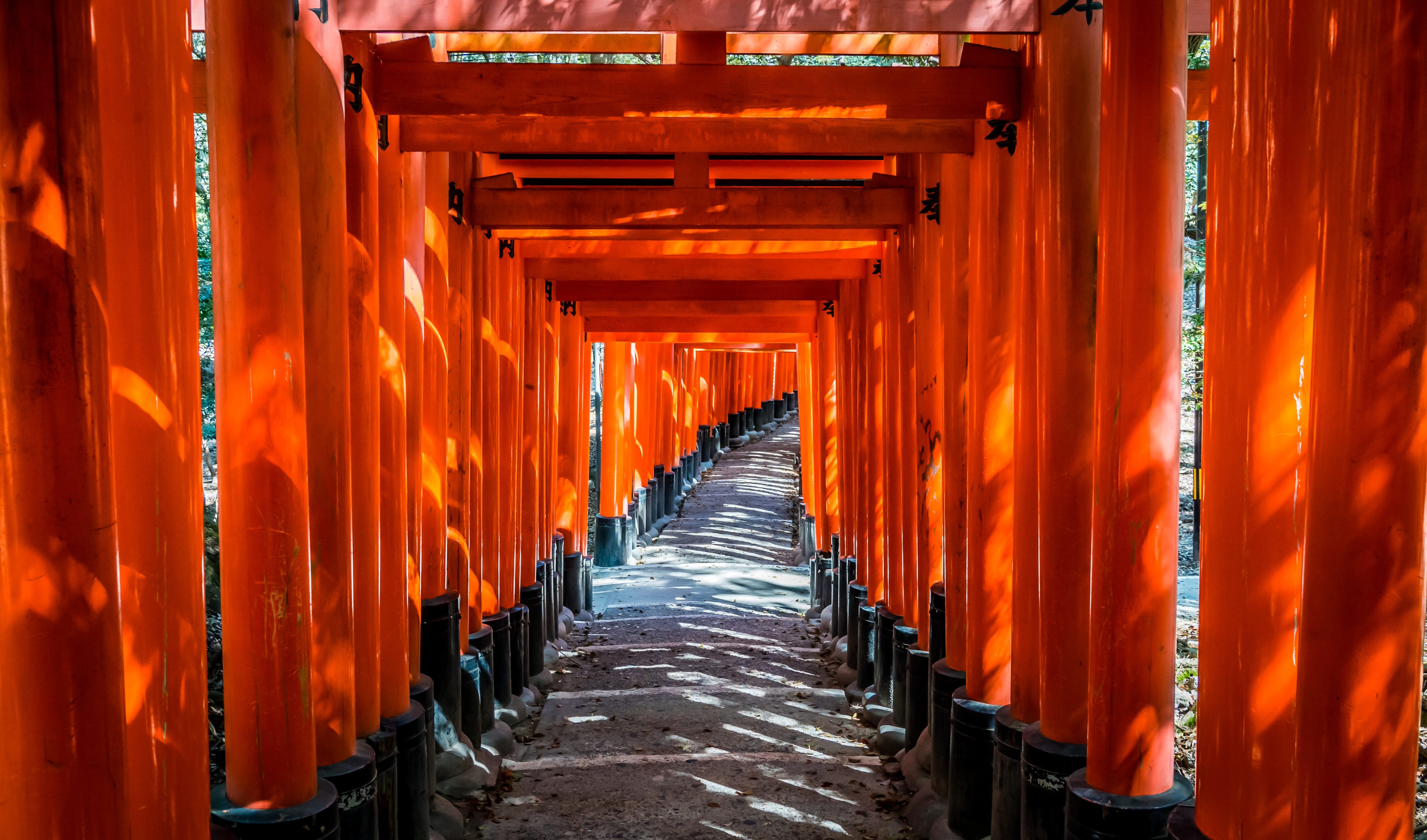
Every photograph of Fushimi Inari looks the same: a tunnel of vermillion torii gates, a slow river of visitors, smartphones raised. It is one of Japan’s most visited sites, and by mid-morning on any day of the year, it feels exactly like that.
But the shrine doesn’t end at the postcard image.
The path continues — for four kilometres, up through cedar forest, past smaller shrines and stone foxes worn smooth by decades of rain, to the summit of Inari-san at 233 metres above Kyoto. Most visitors turn back long before reaching the top.
Which is, of course, where the mountain begins to reveal itself.
For travelers looking for quiet places in Japan that aren’t technically hidden — but feel that way anyway — the upper reaches of Fushimi Inari are one of Kyoto’s best-kept open secrets.
Fushimi Inari Taisha was established in 711 CE, making it older than Kyoto itself. It is the head shrine of Inari — the kami of rice, sake, agriculture, industry, and worldly success — and approximately 32,000 sub-shrines across Japan trace their lineage to this mountain.
The lower precinct, with its great torii gates and main hall, is spectacular and deservedly famous. But the mountain above it is a different shrine entirely.
The torii gates that line the upper trail are smaller here, older-looking, their paint faded to rust and brick. Some bear kanji that the rain has nearly erased. The foxes that guard each sub-shrine sit in various states of weathering — one missing an ear, another with a mossy back, a third that appears to have grown from the stone it stands on.
The mountain keeps its older face for those who climb far enough to see it.
Before eight o’clock, the lower gates are navigable — occasionally empty enough to hear birdsong. By the time you reach the halfway point, a small rest stop called Yotsutsuji with benches and a view across Kyoto, the trail has thinned considerably.
The light through the torii at dawn is different from any other time. Cooler. More honest.
The shrine is open around the clock. The pathway lights that illuminate the gates after dark transform the whole mountain into something more private, more strange. The fox statues take on a different quality in lantern-light. The sound of the city falls away more quickly than you’d expect.
Late evening visits are, in their way, the most rewarding. You will likely share the mountain with only a handful of other people — local residents, the occasional photographer, a few visitors who discovered the same thing you have.
Avoid midday on weekends. There is no polite way to put this differently.
The full circuit — lower precinct, summit, and back — takes roughly two hours at a steady pace, more if you stop to read the inscriptions on the torii or rest at one of the small teahouses along the way.
The path is well-maintained, mostly stone steps, occasionally steep. Good footwear is worth wearing — not hiking boots necessarily, but something with grip.
There are small stalls selling grilled sparrow and quail on skewers, a Fushimi specialty that surprises most visitors. The tofu soft-serve at a small shop near the summit turn-off is, against all expectations, excellent.
For those who want to understand what they’re walking through — the history of the Inari cult, the meaning of the foxes, the etiquette of the sub-shrines — walking with someone who knows the mountain changes what you notice. Guided early-morning walks of Fushimi Inari offer that context in a way that reading rarely can.
The higher you climb, the more the mountain feels like a living thing rather than a monument. The gates give way to forest. The forest gives way to mist. The foxes watching from their pedestals seem less like decorations and more like residents.
Fushimi Inari does not require reverence in the formal sense. It rewards attention.
The walk up is physical — your legs will know about it — and somewhere around the halfway point, the noise of the city and the morning crowds falls far enough behind that something quieter takes its place.
That quality is harder to photograph. But it is the reason people come back.
Fushimi Inari is five minutes’ walk from Inari Station on the JR Nara Line from Kyoto Station. The Keihan Fushimi Inari Station is also a short walk from the main entrance.
The train from Kyoto Station to Inari takes twelve minutes — one of the more useful things the JR Pass quietly covers for those moving between Kyoto, Nara, and Osaka during their trip.
There is no admission charge. The shrine grounds are open at all hours.
If you plan to visit early — and the mountain rewards early arrivals — staying in southern Kyoto or near Fushimi puts you closer to the trailhead and further from the busier parts of the city. Small guesthouses in the Fushimi or Tofukuji neighborhoods are worth considering; they can be found through Booking.com or Agoda.
Most people visit Fushimi Inari for thirty minutes and leave with a photograph. A few walk to the top. Fewer still come back at dusk, or before sunrise, and discover the mountain that most visitors never find.
The gates are always open. The mountain is patient.